
Every musician begins with a first note. A first piano should make that beginning inviting, comfortable, and practical for the people who will use it every day.
Start with the student, not the showroom
A child beginning lessons needs an instrument that encourages regular practice. Ask the teacher whether a fully weighted keyboard and pedals are recommended for the student’s current level. A comfortable bench, suitable height, and an easy-to-reach practice space are also part of the decision.
The best first piano is not automatically the most expensive one. It should respond consistently, allow the student to hear differences in touch, and fit the household’s budget and available space.
Acoustic, digital, or hybrid?
An acoustic piano creates sound when hammers strike strings. An upright can be an efficient choice for a family room, while a grand may be appropriate when a player needs greater expressive control and the home has space for it. Both require ongoing tuning and care.
A digital piano uses electronic sound generation and generally does not require acoustic tuning. Headphone practice and volume control can make it practical in shared spaces. Models differ in key action, pedal behavior, and speaker systems, so compare them with the same short passage rather than relying only on specifications.
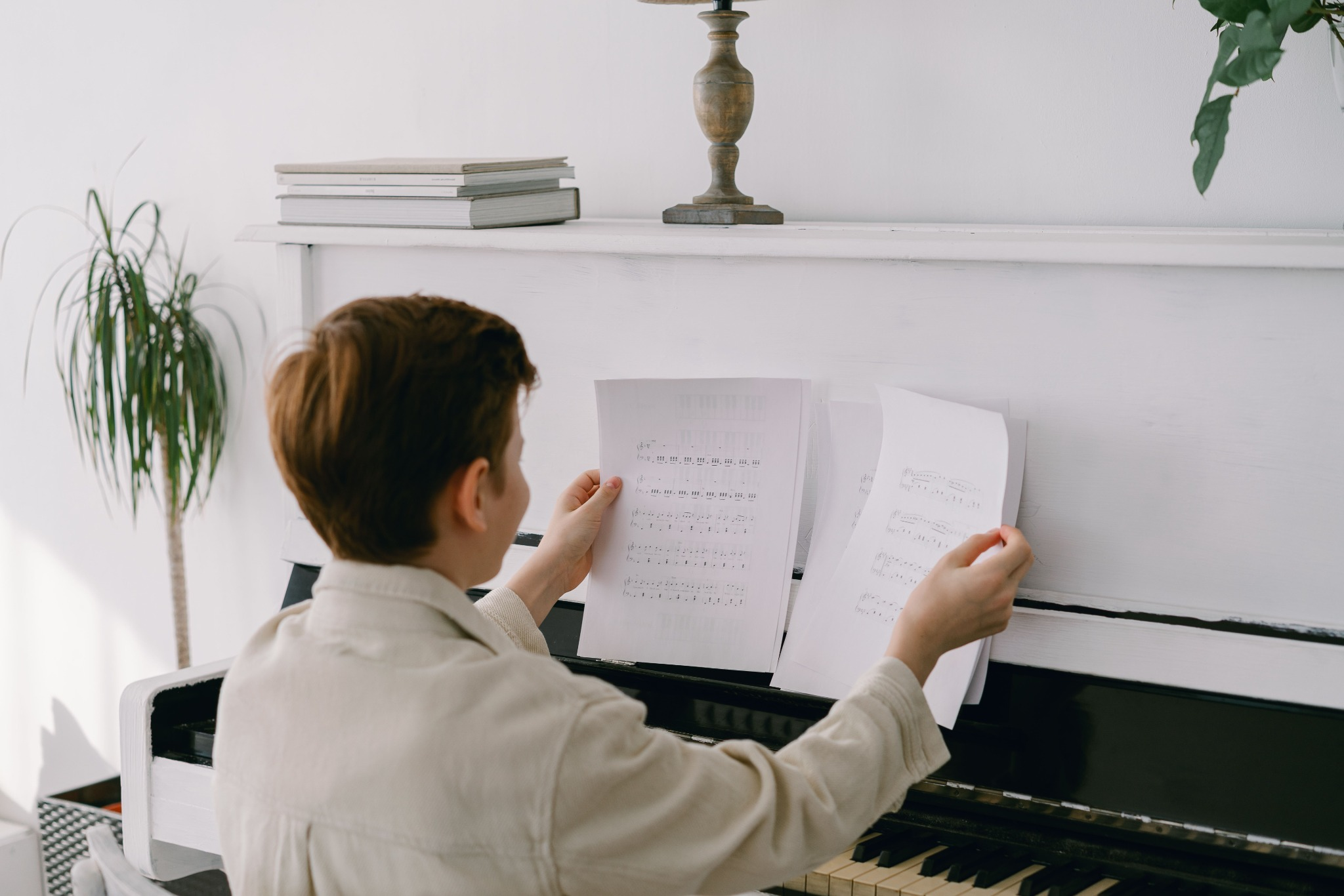
Make practice a routine, not a test
Place the instrument where a student can sit down easily and where practice can become a normal part of the day. Short, consistent sessions are often easier to maintain than occasional long ones. Celebrate small improvements, and ask the teacher what kind of progress to expect between lessons.
A piano should also invite unstructured play. Exploring familiar songs, improvising, and sharing music with family can make the instrument feel like part of home rather than another assignment.
Questions to ask before you buy
Who will play now, and who may play in a few years? What are the room dimensions? Is headphone practice important? What does the price include for delivery, setup, warranty, or service? If buying pre-owned, what condition assessment has been performed? Bring these questions to the gallery and compare options side by side.
Explore your options
Compare instruments and take the next step at your own pace.
Further reading
For the technical distinctions described here, see these manufacturer educational guides. Product features and service requirements vary by model.